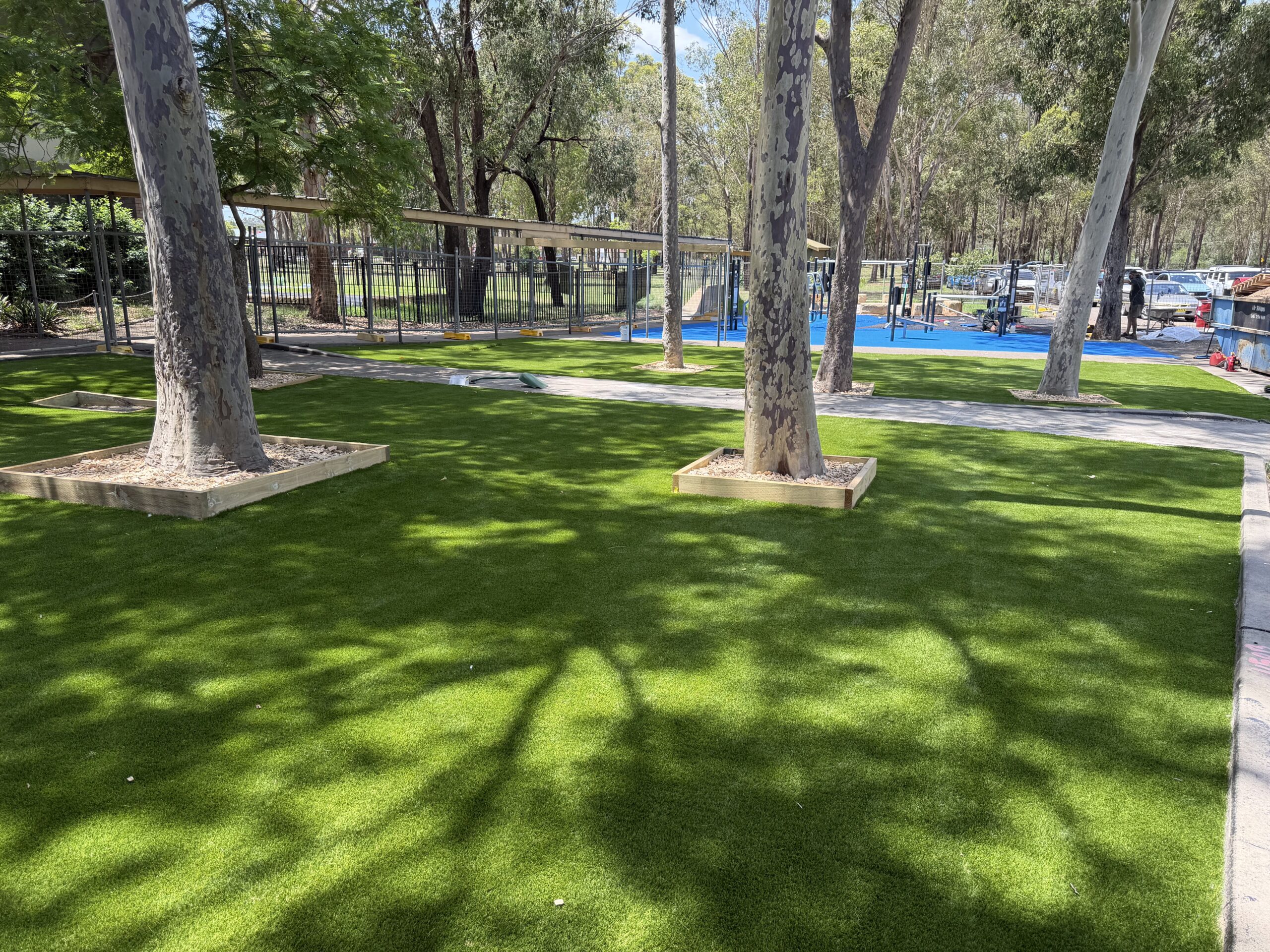
Yes, you can lay synthetic turf over concrete in Macarthur if the slab is sound, drains well and leaves enough clearance around doors and gates. Before choosing turf, check for low spots, loose concrete and raised edges. These checks help you work out whether the slab is ready to cover or needs preparation first.
What to check before laying synthetic turf over concrete in Macarthur
Sweep the slab so you can see its condition. Fine surface cracks may be manageable if both sides sit level and the concrete is stable. If one side of a crack has lifted, the slab crumbles underfoot or pieces move when you step on them, have the surface assessed before covering it.
Run a straightedge across any joins or old repairs you can feel underfoot. Synthetic turf follows the shape of the surface beneath it, so a ridge or depression can still be noticeable after installation. A thicker pile might soften the feel of minor texture, but a raised slab edge still needs attention.
Check for paint, sealant, grease or old adhesive, especially on a former carport or barbecue area. These can affect how well a fixing system grips the concrete. Tell your installer what’s on the slab so they can confirm how it needs to be cleaned or prepared.
Follow the water across the slab
After rain, look at where the water flows and where it sits. You can also use a hose to wet a small area and watch whether water travels towards a drain or collects beside a wall, step or doorway. Take a photo of any puddles to show the installer.
Drainage holes in the turf backing let water reach the concrete below. From there, the slab’s slope or the drainage system underneath the turf needs to carry it away. Covering a low spot can make it harder to see standing water, especially in a shaded courtyard that dries slowly.
Keep drain grates and inspection covers accessible. If the concrete slopes towards the house or water already gathers at the door, sort out where it should go before laying the turf. Ask how any proposed underlay or perimeter fixing will affect that route.
Check doors, gates and changes in height
Before ordering synthetic turf over concrete in Macarthur, ask for the combined thickness of the turf and any underlay. An outward-opening door or low side gate may clear bare concrete but catch on the finished surface. Use a sample of the proposed build-up to check the full swing, including the point where the door sits closest to the slab.
Look at every place where the turf will meet another surface. A raised edge where it meets pavers, steps or a driveway can catch a shoe or make it harder to wheel a pram across. Ask how the installer will finish those edges and keep them secure on frequently used routes.
The height matters at drains as well. Confirm you can still lift the grate for cleaning and that the finished turf leaves room for water to reach it.
Choose turf and fixing to suit the space
Think about how you’ll use the area. A covered patio used for seating needs a surface that’s easy to sweep around furniture. If your dog uses a concrete side yard as its toilet, you’ll want to know how rinse water will drain and how you’ll clean around walls and edges.
For synthetic turf over concrete in Macarthur, ask your installer to cover these points in the quote:
- Surface preparation. Confirm who will clean the slab and deal with loose coatings, uneven patches or raised joins.
- Drainage. Ask where rainwater and rinse water will go and how existing drains will stay accessible.
- Underlay. Check whether it adds the cushioning or drainage you need and how much height it adds.
- Fixing and joins. Confirm how the installer will secure the turf, where the seams will sit and how the edges will meet doorways and paths.
When to Call a Professional
Get the slab assessed if it has raised cracks, holds water or sits close to a door threshold. For a balcony or rooftop, check the building or strata requirements before approving any fixing method. Ask how the installer will protect the waterproofing and maintain access to drains.
Contact Luxury Synthetic Grass for a site assessment if you’re planning synthetic turf over concrete in Macarthur. Show the team where water pools, which doors swing over the slab and how you intend to use the space. Ask them to specify any repairs or drainage work needed before installation.
Conclusion
A sound, well-drained slab can provide a base for synthetic turf. Check where water flows, measure clearance under doors and gates, and inspect the edges where turf will meet existing surfaces. Book a site assessment with Luxury Synthetic Grass to confirm whether your slab is ready and what the finished installation will involve.
Frequently asked questions
Do you need underlay for synthetic turf on concrete?
It depends on the product and how you use the space. A compatible underlay can add cushioning, and some systems provide a path for water to drain. Check how much height it adds at doors, steps and gates.
Can you glue synthetic turf directly to concrete?
Yes, if the turf system allows it and the slab is clean, dry and suitable for the specified adhesive. Ask where the adhesive will be applied so the fixing method suits the drainage and layout of the area.
Will rainwater drain through synthetic turf on concrete?
Water can pass through a permeable backing, but it still needs a way to leave the slab. If the concrete already puddles after rain, work out how to correct the drainage before covering it.
Can you lay synthetic turf over cracked concrete?
Fine, stable cracks may be suitable for covering once the slab is prepared. Raised, moving or crumbling sections need assessment first because they can leave the finished surface uneven.