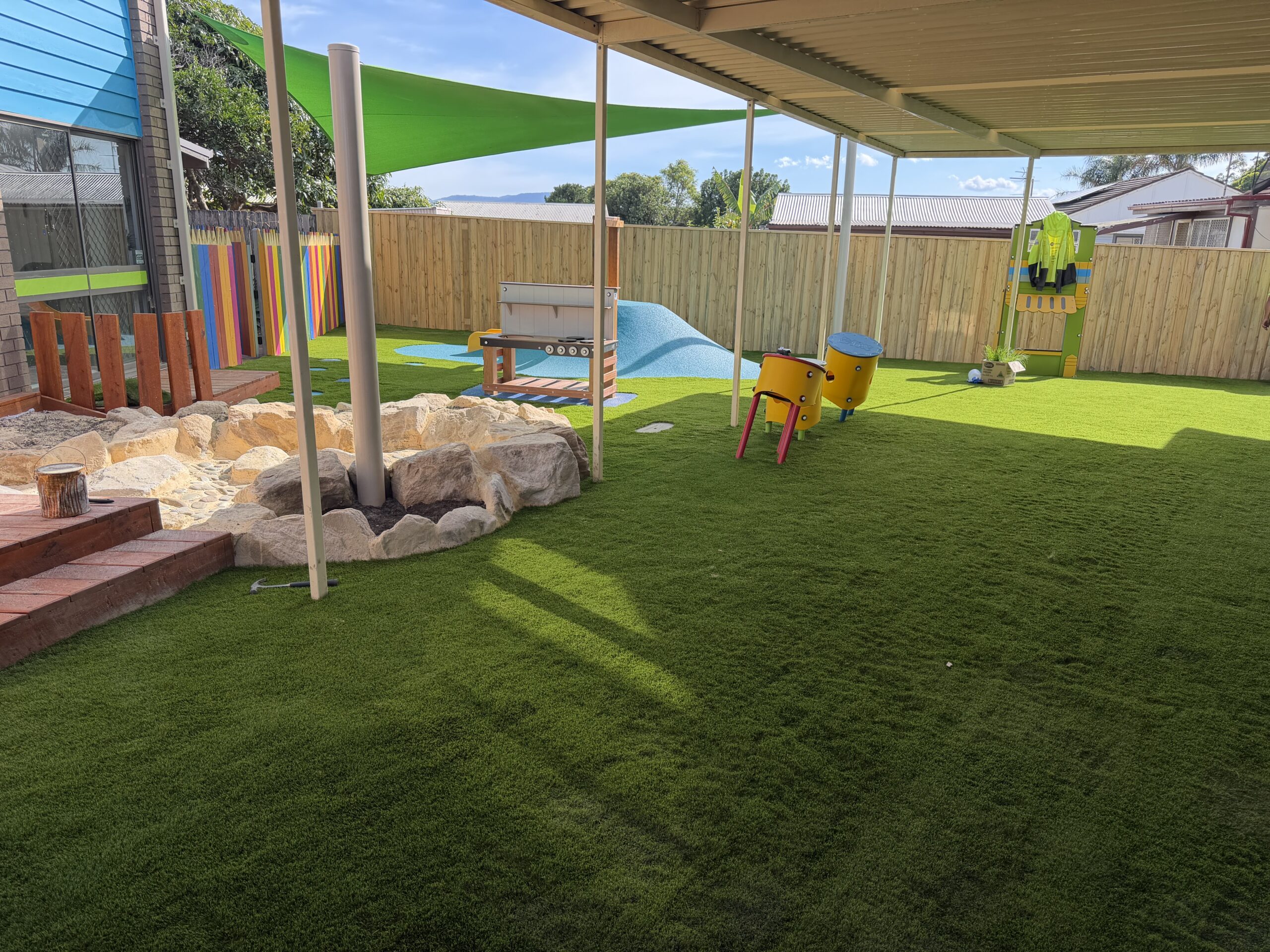
Yes, you can lay synthetic grass over concrete when the slab is sound, suitably prepared and able to drain. The installation needs compatible fixing materials and careful attention to edges, joins and finished heights. Underlay may improve comfort, but it cannot correct structural damage or solve poor drainage.
For your Camden courtyard or patio, keeping an existing slab may avoid unnecessary demolition. However, inspect the surface before ordering turf. Covering concrete changes its appearance, while problems underneath can remain.
Is Your Concrete Suitable for Artificial Turf?
Start with the slab’s condition. A suitable base should be stable, clean and free from loose material that could interfere with the installation.
Look for raised sections, crumbling edges and cracks with noticeable movement. Minor surface defects may be repairable, but significant damage needs assessment before you cover it.
Check how the space functions. Doors must open freely, drains must remain accessible and the finished surface should not create a trip at adjoining paths.
Take photographs and measurements before contacting Luxury Synthetic Grass & Rubber Surface. Include any areas where water collects, as these details help explain your Camden project.
Plan Drainage Before Laying Synthetic Grass Over Concrete
Drainage holes in turf backing allow water through the grass. They do not create an escape route through the concrete beneath it.
Water needs a continuous path towards a suitable outlet or open edge. If the slab already holds puddles, investigate the cause before installation.
A drainage layer can help water move beneath the turf in an appropriate system. However, it still needs somewhere to discharge. Pet-turf systems designed for concrete may use drainage cells to support that movement.
Avoid drilling holes into a slab without understanding its construction. Suspended slabs, waterproofing and concealed services require particular care.
Do You Need Underlay?
Underlay is not automatically required for every installation. Its purpose depends on the product and how you intend to use the area.
A compatible cushioning layer may make a hard patio more comfortable underfoot. A drainage mat serves a different purpose, although some systems combine functions.
Ask the installer to explain:
- Whether cushioning or drainage is needed.
- Which products suit the selected turf.
- How additional layers affect finished height.
- Whether the manufacturer permits the proposed installation.
Artificial grass installed directly over concrete remains a hard surface underneath. Do not assume a soft-feeling lawn provides suitable impact protection beneath playground equipment.
How Should the Surface Be Prepared?
Clean and inspect the slab
Remove furniture, debris and loose coatings before assessing the concrete. Dirt, grease and unstable paint can affect adhesive performance.
Cleaning methods should suit the surface and fixing system. Allow the slab to meet the adhesive manufacturer’s moisture requirements before bonding.
Repair appropriate defects
Address small repairable defects using products compatible with the installation. Follow curing instructions rather than covering repairs immediately.
Raised edges or continuing movement need further investigation. Turf can conceal a defect without making it stable.
Check levels and clearances
Measure the combined height of the turf and any additional layers. Check door swings, thresholds, gates and transitions to adjoining paving.
Keep drainage outlets accessible. Avoid covering inspection points or bridging details that need to remain clear.
How Is the Turf Secured?
The fixing method depends on the turf, concrete and site conditions. Installers may use suitable outdoor adhesives, joining materials or a specified fixing system.
Follow the manufacturer’s instructions for adhesive coverage, temperature and curing time. Applying more glue does not necessarily produce a better installation.
Plan joins and pile direction before cutting. Consistent orientation helps adjacent pieces look similar, while accurate trimming supports a neat finish.
Secure edges matter in frequently used areas. Loose corners can become trip hazards or give pets somewhere to pull at the backing.
Is It Suitable for Dogs and Children?
Think about how your household will use the space before choosing the system. A decorative courtyard has different requirements from a dog toilet area or children’s play space.
For dogs, ask how urine and cleaning water will move through and away from the installation. Remove solid waste promptly and use compatible cleaning products.
For children, assess comfort and surface temperature before use. Artificial turf can become hot in direct sun, so provide shade and cooler alternatives.
Where play equipment requires impact-attenuating surfacing, obtain advice on the applicable requirements. Ordinary landscape turf and general-purpose foam should not be assumed suitable.
Can You Install It Yourself?
A small, straightforward area may suit a capable DIYer if the manufacturer allows the proposed method. Accurate measuring, cutting and preparation still matter.
Read the full installation instructions before buying materials. Check whether DIY installation affects warranty conditions and whether specialist adhesives require particular handling.
Professional assessment makes sense where drainage is uncertain, the slab is damaged or several levels meet. Balconies and waterproofed areas also need care before any fixing work.
Frequently Asked Questions
Can you glue artificial grass directly to concrete?
Some products allow direct bonding to suitable concrete. Use the specified adhesive and fixing pattern, and confirm how water will drain before proceeding.
Can artificial turf cover uneven concrete?
It may follow minor surface variations, but it will not reliably hide raised edges or correct significant unevenness. Prepare or repair the base first.
Can you put artificial grass on a balcony?
Potentially, subject to drainage, waterproofing, clearances and any building or strata requirements. Avoid penetrating waterproofing or obstructing outlets.
Does turf on concrete need cleaning?
Yes. Remove debris and waste, clean spills and follow the manufacturer’s care instructions. Inspect edges and drains during routine cleaning.
When to Call a Professional
Arrange an assessment for recurring puddles, moving cracks, raised sections or uncertain drainage. Seek appropriate advice before altering a balcony or waterproofed slab.
Contact Luxury Synthetic Grass & Rubber Surface to discuss synthetic grass over concrete at your Camden property. Request a written scope covering preparation, drainage, fixing and finishing.
Conclusion
Laying turf over an existing slab can work when the concrete is suitable and water has a clear escape route. Check preparation, comfort and finished heights before committing.
Speak with Luxury Synthetic Grass & Rubber Surface about your Camden space and request a quote based on its condition and intended use.